Showing posts with label Health. Show all posts

Sunday, 21 February 2016

STOP IT!! Ladies If You Wear Pan.ts To Bed Every Night…..You Need to Read This!


Do you wear pants to bed? Many women would likely answer in the affirmative. However, experts say when a woman does so on a daily basis when it’s not necessarily because she is having her period, there may be untoward side effects to it!
Physicians aver that the female genital needs to breathe in order to maintain its PH levels and prevent fungi and odour. And that’s why doctors advise going bare below when it’s bed time at the close of day.
“With BV, there is an increase in harmful bacteria and a decrease in good bacteria. BV is the most common va’ginal infection in women of child-bearing age.”

Part of the problem, says Family Physician, Dr. Grace Obong, is that during the day, women wear a variety of panties and tight outfits that hardly allow their privates to breathe. She says though it’s advisable and absolutely preferable to wear cotton panties, many women still opt for polyester panties, with the attendant heating up of the genital area while the day lasts.
And as for those who may not like to go to sleep without having pants on, Obong recommends wearing of boxers or pyjamas.


Bacterial va’ginosis
Talking about the need to maintain the PH levels of the va’gina, experts at womenshealth.gov say the va’gina normally has a balance of mostly “good” bacteria and fewer “harmful” bacteria. However, a condition, called bacterial va’ginosis, develops when the balance changes.

Obong says women with BV may have an abnormal va’ginal discharge with an unpleasant odour, while some women may complain of a strong fish-like odour, especially after se’x.
“The discharge can be white (milky) or gray. It may also be foamy or watery. Other symptoms may include burning when ur’inating, itching around the outside of the va’gina, and irritation; while some women with BV have no symptoms at all,” she adds.

Yeast infection
To further underscore the negative effects of wearing panties to bed, online portal, Medline Plus, also notes that too much moist in the female genital area can lead to va’ginal yeast infection, most commonly due to the fungus Candida albicans.
“Wearing tight underwear or a pair made from polyester or some other material that doesn’t breathe can lock in moisture and lead to yeast infections,” the warning goes.

Again, Certified Se’xuality Counselor, Evelyn Resh, says, “I do not recommend that women wear underwear to bed. Taking a break from underwear for the eight or so hours that you’re asleep gives you an opportunity to ‘air-out’ down there! Best to have an underwear-free zone while sleeping.”
And while yeast infection is not a se’xually transmitted illness, physicians say some men will develop symptoms such as itching and a rash on the penis after having se’xual contact with an infected partner.
The symptoms of yeast infection are as obnoxious as they are embarrassing, and they include abnormal va’ginal discharge, which ranges from a slightly watery, white discharge to a thick, white, chunky discharge; painful intercourse, painful ur’ination, redness and swelling of the vu’lva; and itching in the va’gina and the lab’ia. You may also feel burning sensation when you have yeast infection.

Go natural
The online physician, Dr. Mehmet Oz, counsels, “It’s time to go au naturel. You don’t want it to be so moist down there. Let it dry out a little bit.” The reason for this timely advice, Oz says, is because the underpants can abrade on your skin a little bit, and can cause pimples. And you don’t want that

READ ALSO>>SHOCKING; New Disease Affecting Women Who Are Using Female k (0nd) 0ms! Be Informed…

Saturday, 20 February 2016

SHOCKING; New Disease Affecting Women Who Are Using Female k (0nd) 0ms! Be Informed…

vagino
The most common types of v@j1n1-t1s include:
“Y3ast” infections–Infections caused by the fungus Candida. The most apparent symptom of a yeast infection is a thick, white v@j1-n0l discharge; some women also experience a red, ichy v*lva. There are many over-the-counter and prescription treatments for yeast infections. If you think you have a yeast infection, talk to your health care provider about how to treat it.

READ HERE>>Men Be Aware Of These University Ladies On facebook,dont say you were not warned


  • Bacterial v@j1-n0-sis–Caused by an overgrowth of bacteria that are normally present in the v@jina. This type of vaj!nosis is the most common vj1inal infection for women of reproductive @ge. The most common symptom is a v@jinal discharge, which is usually thin and m!lky; it may also have a “f!shy” 0dor. Your health care provider can recommend medications to treat bacterial v@j1-nosis
    • S3xually transmitted forms of v@jin1-tis–These types of v@j1-nitis are most often spread through s3sual contact (v@j1nal, oral, or @n0’l int3rcourse or int!mate contact), and are also called s3xually transmitted diseases (STDs) or s3sually transmitted infections (STIs). Some types of s3sually transmitted v@j1nitis include:
    • Trichomoniasis–Is a curable infection. Many women with this condition don’t have any symptoms; but some women do. Common symptoms include: vaginal discharge that is bubbly, greenish-yellow, and has an odor; itching and soreness of the vulva and the vagina; and burning when you urinate. Most health care providers will prescribe an antibiotic to treat and cure trichomoniasis; however, for treatment to work properly, sexual partners should be treated at the same time.
    • Chlamydia–Is a curable infection. Because chlamydia does not make most people sick, you can have the infection and not even know it. Symptoms of chlamydia include a mucus-like or pus-like vaginal discharge or pain when you urinate. But these symptoms can be mild. The bacteria can also infect your throat, if you’ve had oral physical contact with an infected partner.ohhsgd
    • A pregnant woman infected with chlamydia can transmit the infection to her infant during delivery. In the infant, the infection can cause the lining of the eye to become swollen and red (often called pink eye). If left untreated, chlamydia can move inside the body and cause pelvic inflammatory disease (PID), which can be serious. Health care providers will prescribe an antibiotic to treat and cure chlamydia; however, penicillin, an antibiotic used to treat other infections, won’t cure chlamydia.
    • Herpes simplex virus (HSV)–Also called “genital herpes,” is caused by a virus. Genital herpes can be controlled, but not cured. Most women with genital herpes will have sores or lesions on the vulva, or on the outside of the vagina; sometimes these sores are found within the vagina, and can only be seen during a gynecological exam. The sores are often the source of pain for women infected with genital herpes. Your health care provider can recommend ways to control the symptoms of genital herpes.
      • Human papilloma virus (HPV)–Is caused by a virus. It can be controlled, but not cured. Some women with HPV don’t have any symptoms; they don’t find out they have the virus until they get the results of their annual pap smear. Other women with HPV have genital warts, usually gray, white, or purple, that grow in their vagina or rectum, or on their vulva or groin. Genital warts can be painful. Some types of HPV are known to lead to certain types of cervical cancer and other cervical problems. Efforts are now underway to develop a vaccine to protect women from HPV, which could also prevent certain types of cervical cancer.
      • Noninfectious vaginitis–Is typically the result of an allergic reaction or an irritation to vaginal sprays, creams, and spermacides, or to soaps, detergents, and fabric softeners. Once you stop using the product that caused the reaction, your symptoms should go away. But, your health care provider may suggest a medicated cream to reduce the symptoms until the reaction goes away.
    •  

Wednesday, 17 February 2016

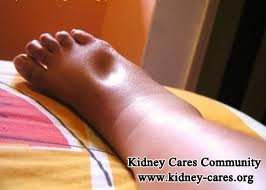
Proven Ways On how to Prevent Swelling Legs During Pregnancy

home remedy for swollen legs in kidney disease


During pregnancy, the body produces approximately 50% more blood and body fluids to meet the needs of the developing baby. Swelling is a normal part of pregnancy that is caused by this additional blood and fluid.
Normal swelling, which is also called edema, is experienced in the hands, face, legs, ankles, and feet.

Read More>>LADIES ONLY; How To Tighten Your Vi'gina Wall After Giv'ing B'irth In Less Than 2-3 Weeks


This extra retention of fluid is needed to soften the body, which enables it to expand as the baby develops. Extra fluid also helps prepare the pelvic joints and tissues to open for delivery. The extra fluids account for approximately 25% of the weight women gain during pregnancy.

When does swelling occur during pregnancy?

Swelling may be experienced at any point during pregnancy, but it tends to be noticed around the fifth month and can increase while you are in the third trimester
The following factors may also affect swelling:
  • Summertime heat
  • Standing for long periods of time
  • Long days of activity
  • Diet low in potassium
  • High level of sodium intake
Slight swelling is expected during pregnancy; however, if you experience sudden swelling in your hands and your face, it could be a sign of preeclampsia.  It is important to contact your health care provider about any sudden swelling.

What can you do to treat swelling during pregnancy?

Swelling may be reduced by eating foods that are high in potassium, such as bananas, and by avoiding caffeine.
Here are some other helpful hints to manage swelling during your pregnancy:
  • Avoid standing for long periods.
  • Minimize outdoor time when it is hot.
  • Rest with your feet elevated.
  • Wear comfortable shoes, avoiding high heels if possible.
  • Wear supportive tights or stockings.
  • Avoid clothes that are tight around your wrists or ankles.
  • Rest or swim in a pool.
  • Use cold compresses on swollen areas.
  • Drink water, which helps flush the body and reduce water retention.
  • Minimize sodium (salt) intake and avoid adding additional salt to meals.

Sunday, 3 January 2016

A Russian Laboratory Has Invented A Way To Remove The Black Skin Layer Of Black People

Controversial Procedure

Controversial Procedure

Saturday, 2 January 2016

ALL WOMEN MUST SEE; New HIV Protection Gel For Women

ALL WOMEN MUST SEE; New HIV Protection Gel For Women
46499886.cached
New developments in the field of HIV prevention mean women will no longer be dependent on men to protect their sexual health.
We may soon have the Plan B of HIV prevention. A study published this week shows promise for women being able to successfully combat HIV transmission even after a sexual encounter. This time, hope comes in the form of a vaginal gel. In the first step towards its clinical development, when the gel was applied to macaque monkeys within three hours after exposure to theVIRUS, five out of six primates remained HIV-free.
Unlike previous vaginal gels or microbicides that have been shown to work when applied prior to exposure, this one relies on utilizing a drug from a class that interferes at a later step in the HIV transmission process.

READ ALSO!!!Everything You Need To Know About The ‘New’ Sexually Transmitted Disease (Must Read)

Everything You Need To Know About The ‘New’ Sexually Transmitted Disease (Must Read)

Everything You Need To Know About The ‘New’ S-3xu@lly Trans-mitted Disease (Must Read)
STDs
A little-known s-3xu@lly trans-mitted disease that has attracted more attention lately may actually be fairly common, according to a new study.
The study found that the bacterium Mycoplasma gen!t@l!um, which is thought to be s3xu@lly trans-mitted, infects more than 1 percent of people ages 16 to 44 in the United Kingdom. That comes out to about 250,000 people, according to U.K. census data. Studies in the United States have found that a similar percentage of people here are infected with M.genitalium.
That makes M. genitalium a more common s-3xu@lly transmitted disease (STD) than gonorrhea, according to the Centers for Disease Control and Prevention. [Hidden STD Epidemic: 110 Million Infections in the US]
Here’s what you need to know about Mycoplasma gen!t@l!um:
Is this a new STD?
Some news outlets have described M. g3n!tal!um as a “new” s-3xu@lly trans=mitted infection, but the bacteria were first discovered in 1980. At this time, researchers didn’t have the right types of test to study M.g3n1tal1um, so the connection between M. g3n1t@l!um and s-3xu@l activity came a little later — around the mid-1990s, said Lisa Manhart, a professor of epidemiology at the University of Washington in Seattle, who was not involved in the new study, but has researched M. gen!t@l!um. For example, early studies found that people who tested positive forM. g3n!t@l!um often had s-3xu@l partners who were infected with the disease as well.
The new study adds to the evidence that M. g3n!t@l!um is an STD, because it found that the infection was more common in people who had at least four new s=3xu@l partners in the past year than in people who had one or fewer new partners in the past year. In addition, people were more likely to have M.genitalium if they had unprotected s-3x, and no infections were found in people who had never had s-3x, according to the study, which was published Nov. 3 in the International Journal of Epidemiology.
What symptoms does it cause?
In men, the bacteria can cause inflammation of the ur3thr@ (called urethritis) that leads to symptoms such as a burning pain while ur!n@t!ng or discharge from the pe'nis.


Tuesday, 15 December 2015

Possible Medical Risks of V’aginal Piercings. ALL LADIES BE WARNED.

Possible Medical Risks of V’  aginal Piercings
Nefertiti-Piercing


Any time you create an opening in the body there is a chance of infection. Going to a questionable piercing shop can put you at risk for tetanus, HIV,hepatitis B and C, and other sexually transmitted diseases (STDs). Sometimes, vaginal piercings can lead to bleeding, scarring, or an allergic reaction. Piercing behind the clitoris may interfere with blood flow.

READ MORE!!!!>>Men Only; Do This Three Things And You Will Make H'er W'et During S*x…